Social Sciences with a focus on economic education
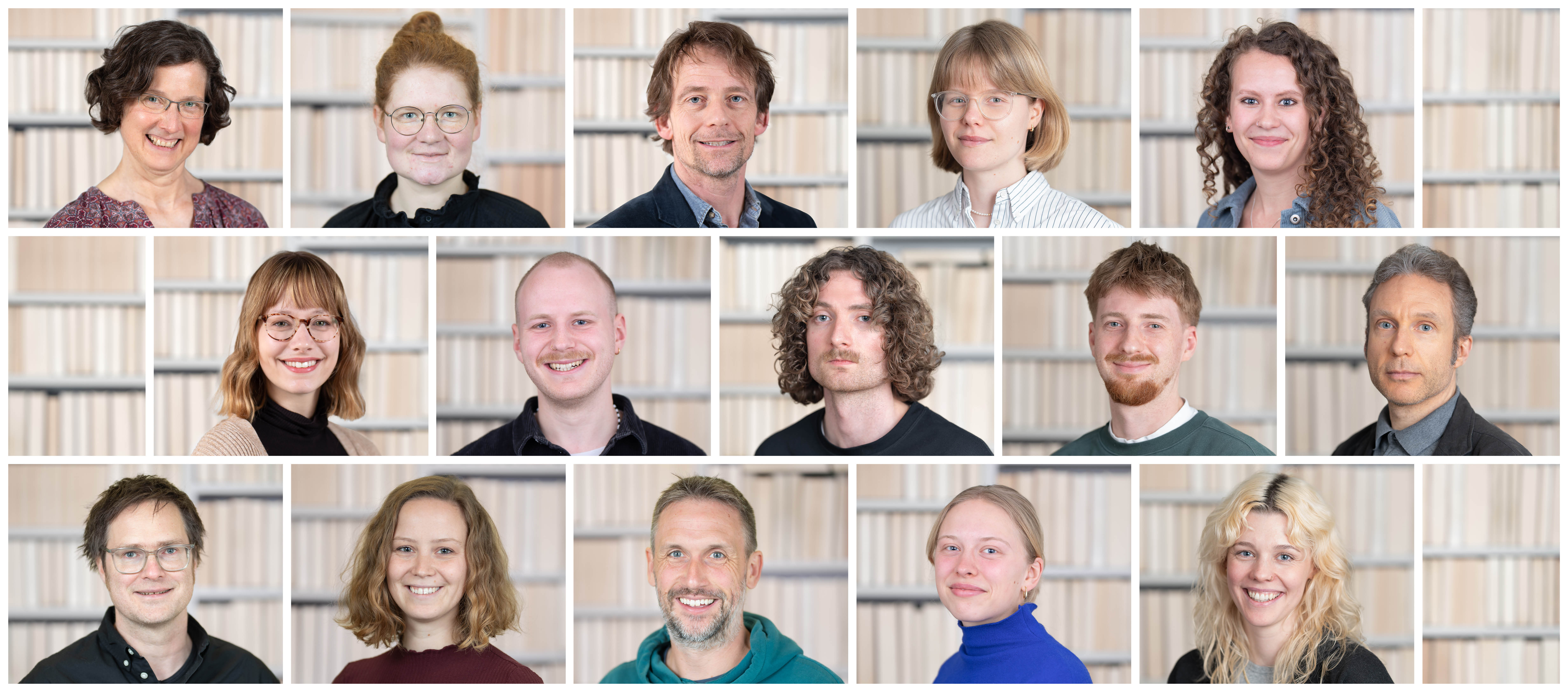
Profile
The Chair of Social Sciences with a focus on economic education is dedicated to social sciences from a socio-economic perspective. In order to analyse the relationships between the economy, politics and society as well as their institutions, narratives and ways of thinking, we rely on the diversity of social science theories, paradigms and methodologies. Economically shaped life situations are subject to the interdependence of social contexts, cultural influences, historical path dependencies and psychological mechanisms, and are at the same time shaped, formed and guaranteed by political decisions. Assuming that the social sciences are to be understood as an integrative domain, we place research and teaching under the guiding principles of social science multiperspectivity, inter- and transdisciplinarity. The integrative approach that is constitutive for learning in the social sciences is based on core characteristics of the subject area as well as on the subject-didactic principles of situational, lifeworld, problem and science orientation. Currently, we are dealing with the curricular design of (socio-)economic and political education, digitalisation processes in the context of socio-scientific educational concerns, the analysis of learners' preferences and attitudes and the question of the extent to which the concept of statehood is changing under the pressure of privatization.
Recent Publications
Engartner, T., & Engartner, C. (2026). Die Zukunftsfähigkeit des Sozialstaates - eine fachdidaktische Perspektive“, POLIS, 31. Jg., Heft 3, S. 14-17, https://doi.org/10.46499/2593.4056
Engartner, T., & von Orloff, D. (2026, 13. September). DB versus FlixTrain und Co.: Mehr Wettbewerb schadet der Bahn erst recht. Surplus. https://www.surplusmagazin.de/bahn-wettbewerb-db-flixtrain-marode-gleise-reform/
Engartner, T., & von Orloff, D. (2026). Verfehlte Weichenstellungen. Die fatalen Folgen der Bahnliberalisierung in Europa. Campus.
Engartner, T., & Bürgel, F. (2026). Beutelsbacher Konsens. Ein Kompass für die sozioökonomische Bildung. bildung & wissenschaft, 7/8 (2026), 22-24. https://www.gew-bw.de/mitgliederzeitschrift-bw
Muschaweck, I., Heijens, M., Heinemann, T., Schneider, A., Staack, B., & Kanwischer, D. (2026). Fallvignetten zur Erhebung digitaler Souveränität und ihrer Förderung von angehenden Lehrkräften der gesellschaftswissenschaftlichen Fächer. In K. Scheiter, D. Richter & J. Jennek (Hrsg.), Professionelles Handeln in einer Kultur der Digitalität: Ergebnisse des Kompetenzzentrums SGW (Buchreihe: Digitale Transformation von Schule und Fortbildung gestalten im Kompetenzverbund lernen:digital) (S. 419–439). Waxmann. https://doi.org/10.31244/9783818851668
Heinemann, T., Heijens, M., & Engartner, Tim (2026). Sensibler Umgang mit digitalen Unterrichtsmaterialien in der sozialwissenschaftlichen Bildung. In D. Kanwischer et al. (Hrsg.), Gesellschaftswissenschaftliche Lehrkräftefortbildung in einer Kultur der Digitalität. Theoretische Perspektiven, empirische Befunde und Handlungsempfehlungen (S. 121–128). Waxmann. https://doi.org/10.31244/9783818851705
Engartner, T., Kanwischer, D., John, A., & Staack, B. (2026). Was bleibt und was folgt? Digitale Transformation und epistemische Professionalisierung in der gesellschaftswissenschaftlichen Lehrkräftefortbildung. In D. Kanwischer et al. (Hrsg.), Gesellschaftswissenschaftliche Lehrkräftefortbildung in einer Kultur der Digitalität. Theoretische Perspektiven, empirische Befunde und Handlungsempfehlungen (S. 219–234). Waxmann. https://doi.org/10.31244/9783818851705
Muschaweck, I., Raschke, N., & Heijens, M. (2026). Professionalisierung als reflexive Praxis. In D. Kanwischer et al. (Hrsg.), Gesellschaftswissenschaftliche Lehrkräftefortbildung in einer Kultur der Digitalität. Theoretische Perspektiven, empirische Befunde und Handlungsempfehlungen (S. 57–68). Waxmann. https://doi.org/10.31244/9783818851705
Engartner, T. & Kenner, S. (2026). Politische Bildung: Parteilich für die Grundrechte. Blätter für deutsche und internationale Politik, 6, 37-40. https://www.blaetter.de/ausgabe/2026/juni/politische-bildung-parteilich-fuer-die-grundrechte
Hippe, T. (2026). Landwirtschaft zwischen Ökonomie und Ökologie. Eine transdisziplinäre Problemstudie zur Nachhaltigkeit. Verlag Barbara Budrich.
Engartner, T. (2026, 29. April). Geld allein ist noch kein Schulfach! Immer wieder wird mehr finanzielle Bildung für Schüler gefordert. Doch die muss weit über Anlagetipps hinausgehen. Die Zeit, 19, S. 35.
Bäuerle, L., Keil, A. K., Reinke, R., & Wasenitz, S. (Eds.) (2026). Grundfragen der Ökonomie. Plural - Reflexiv - Lebensnah. Schäffer Poeschel.
Heijens, M.; Heimrich, F. (2026). Wie viel kostet die Mitbestimmung? Wege aus der Ohnmacht hin zur gerechten Teilhabe. Unterrichtsmaterialien 3./ 4. Schulstufe. Erstellt für DIE ARMUTSKONFERENZ. Online unter: https://www.armutskonferenz.at/media/armut_teilhabe_3_4_schulstufe_armutskonferenz.pdf
Engartner, T. & Engartner, C. (2026). Ökonomisierungstendenzen im allgemein- und berufsbildenden Schulwesen. GWP – Gesellschaft. Wirtschaft. Politik, 75(1), 69–82. https://doi.org/10.3224/gwp.v75i1.08
Sorg, L. (2026). Zur Konstruktion des ‚Anderen‘ im Fußball: Implikationen für politische Bildung. Zeitschrift für Fußball und Gesellschaft (FuG), 6(2), 156–170. https://doi.org/10.3224/fug.v6i2.05
Engartner, T. (2026, 21. Februar). Finanzbildung bedeutet mehr als Wissen über Aktien. Surplus. https://www.surplusmagazin.de/finanzbildung-kritik-banken-aktien-etfs-rente-geldanlage/
Engartner, T., Abs, H. J., Hedtke, R., & Oberle, M. (2025). Der Pilotmonitor politische Bildung – oder: Indikatoren zur datengestützten Berichterstattung, GWP – Gesellschaft. Wirtschaft. Politik, 74(4), 443–454. https://doi.org/10.3224/gwp.v74i4.05
Engartner, T., & von Orloff, D. (2025). Mit der Bürgerbahn aus dem Bahndesaster. Wie die Schweiz die Weichen richtig stellt. Blätter für deutsche und internationale Politik, 70(12), 93–102. https://www.blaetter.de/ausgabe/2025/dezember/mit-der-buergerbahn-aus-dem-bahndesaster
Sorg, L. (2025). Fußball als (k)ein Raum für Politische Bildung? Chancen und Grenzen im Umgang mit Exklusionsmechanismen und Neutralitätsforderungen. Politisches Lernen, 43(3+4), 2–7. https://doi.org/10.3224/pl.v43i3-4.01
Heijens, M. J. M. (2025). Emotionale Inhalte in der Fortbildung von Politiklehrkräften. Politische Vierteljahresschresschrift. https://doi.org/10.1007/s11615-025-00639-1
Engartner, T. (2025). Staat im Ausverkauf. Privatisierung in Deutschland (3., aktualisierte und erweiterte Auflage). Frankfurt a. M. / New York: Campus Verlag. https://www.campus.de/buecher-campus-verlag/wissenschaft/staat_im_ausverkauf-18653.html
Engartner, T. (2025). Raus aus der Bildungsfalle. Warum wir die Zukunft unserer Kinder gefährden (Erstveröffentlichung 2024, Neu-Isenburg). Bonn: Bundeszentrale für politische Bildung. https://www.bpb.de/shop/buecher/schriftenreihe/569991/raus-aus-der-bildungsfalle/
Erkens, R. H., Chim, H. Q., Poole, N. L., Wasenitz, S., & Savelberg, H. H. C. M. (2025). Learning is sitting: student and staff perspectives on sitting less at Maastricht University. In Frontiers in Education, 10. https://doi.org/10.3389/feduc.2025.1626953
König, J., Heine, S., Weyers, J., Arntz, C.-G., Kramer, C., Strauß, S., Herhard, K., Mühle, J., Engartner, T., Großschedl, J., Hanisch, C., Hanke, P., Hennemann, T., Jost, J., Kaspar, K., & Rott, B. (2025). Effectiveness of interventions in teacher education: Synthesis of reviews (2010–2024). Zeitschrift für Erziehungswissenschaft. https://doi.org/10.1007/s11618-025-01319-x
von Orloff, D. (2025). Schüler*innenvorstellungen zum Themenkomplex Haushalts-, Steuer- und Fiskalpolitik. In G. Boesken, C. Dahlmanns, G. Ebert, C. Haas, A. Habicher, C. Keeley, M. Kreiten-Bresges, A. Krichel, S. Lammerding, E. Pütz, & S. Riehemann (Hrsg.), Praxisphasen Innovativ. Forschendes Lernen im Praxissemester. Ausgewählte Studienprojekte des siebten fakultätsübergreifenden Präsentationstags 2024 (S. 266-284). Zentrum für Lehrer*innenbildung Köln.
Heinemann, T. (2025). Analysen und Fakten gegen die eingeübten Empörungs-Reflexe: Eine differenzierte Betrachtung des Lobbyismus in Deutschland, Politisches Lernen, 1–2, 79–80. https://doi.org/10.3224/pl.v43i1-2.16
Abs, H. J., Engartner, T., Hedtke, R., Oberle, M., Heijens, M., Hellmich, S. N., Hulkovych, V., Huschle, L., & Wasenitz, S. (Hrsg.) (2025). Pilotmonitor politische Bildung – Indikatoren zur datengestützten Berichterstattung. (Schriftenreihe Band 11134). bpb. https://www.bpb.de/system/files/dokument_pdf/bpb_SR_11134_Pilotmonitor_politische_Bildung.pdf
Engartner, T., Heinemann, T., & von Orloff, D. (2025). Verheerende Weichenstellung. Die Privatisierung der Deutschen Bahn. INDES Zeitschrift für Politik und Gesellschaft, 15(1), 49–59.
Heinemann, T., & Engartner, T. (2025). Der „Digital Turn“ im Klassenzimmer. Schlüssel zu neuen Lernwelten oder Einfallstor für unternehmerische Einflussnahme? In S. Hofhues, & J. Schütz (Hrsg.), Plattformen für Bildung. Von der Empirie zur Theorie (S. 261–281). Transcript. https://www.transcript-verlag.de/978-3-8376-7516-0/plattformen-fuer-bildung/
Heinemann, T. (2025, 10. April). Digitale Unterrichtsmaterialien – die "heimlichen Lehrpläne", verfasst von Unternehmen und Interessengruppen? sowi-online.
Heijens, M. J. M. (2025). Lehrkräftefortbildungen in der politischen Bildung – eine exemplarische Analyse von Zusammenhängen mit der Nachfrage von Angeboten. Bildung und Erziehung, 78(1), 133-160.
Wasenitz, S., & Heijens, M. J. M. (2025). Hermann, Adam: Finanzpolitik. Eine Einführung. Politische Vierteljahresschrift. https://doi.org/10.1007/s11615-025-00596-9
Eisman, J. I., & Wasenitz, S. (2025). Legacy as a creative product of the gatekeeper: A case of Fritz Haber and his gatekeepers. Possibility Studies & Society, 0(0). https://doi.org/10.1177/27538699251317414
Abs, H. J., Engartner, T., Hedtke, R., Oberle, M., Heijens, M., Hellmich, S. N., Hulkovych, V., Huschle, L., & Wasenitz, S. (2025). Entwicklung eines Monitorings für die politische Bildung in Deutschland. In A. Albers & N. Jude (Hrsg.), Blickpunkt Bildungsmonitoring – Bilanzen und Perspektiven (S. 263-277). Beltz Juventa.
A complete list of publications can be found on the respective personal profiles.
