About the focus
Our working group brings together lecturers and cooperation partners who are active in research and practice in the fields of psychiatry, psychotherapy, and social, occupational, and medical rehabilitation. The work is closely linked to psychotraumatology, which we divide into four central pillars.
Pillar 1: Treatment of psychotraumatic disorders
People react very differently to stressful or traumatic experiences. Most often, they show a high degree of resilience — they process what they have experienced without long-term psychological impairment.
However, a smaller proportion develop trauma-related disorders. In a clinical context, this term encompasses various diagnoses that can occur as a result of trauma. The best-known form is post-traumatic stress disorder (PTSD), including complex PTSD and dissociative disorders.
Other possible trauma-related disorders are variants of:
- Emotionally unstable personality disorder (borderline)
- Depressive disorders
- Anxiety disorders
- Addictions
- Somatoform disorders
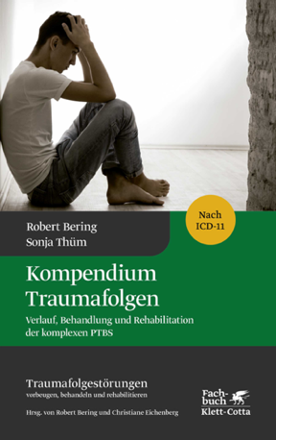
The research findings and best practice experiences of our working group are summarized in Volume II, “Compendium of Trauma Consequences,” of the series TRAUMA CONSEQUENCES — PREVENTION, TREATMENT, AND REHABILITATION.
Pillar 2: Rehabilitation of psychological trauma disorders
The rehabilitation of people with psychological trauma disorders is closely linked to the teaching in the master's program specializing in people with mental impairments. Our approach is based on the biopsychosocial understanding of illness and recovery.
The legal basis is provided by Social Code IX – Rehabilitation and Participation of People with Disabilities (SGB IX). It defines the requirements, entitlements, and options for rehabilitation services.
In the Compendium on the Consequences of Trauma, we have outlined how the following services can be used for the rehabilitation of trauma-related disorders:
- Medical rehabilitation
- Services to promote participation in working life
- Income support and supplementary benefits
- Benefits for participation in education
- Benefits for social participation
A central point of reference is the International Classification of Functioning, Disability, and Health (ICF). The ICF is our classification system for describing a person's need for participation. It takes into account all medical and psychosocial aspects.
Pillar 3: Psycho Target Group Intervention Program (TGIP) in psychosocial emergency care
Psychosocial emergency care (PSNV) arose from the consensus process of the Federal Office for Civil Protection and Disaster Assistance. It encompasses both the overall structure and measures for prevention as well as short-, medium-, and long-term care in the context of stressful emergency or deployment situations. This also includes victim protection, which has been newly regulated in SGB XIV.
The Target Group Intervention Program (TGIP) is a differentiated intervention concept based on stressful experiences. It is oriented toward the risk and resource profile of those affected as well as the type of potential trauma. In doing so, we take into account:
- different forms of psychological trauma
- individual vulnerabilities
- the role of institutional decision-makers
People with disabilities are a particularly vulnerable target group—a focus of our work in special education.
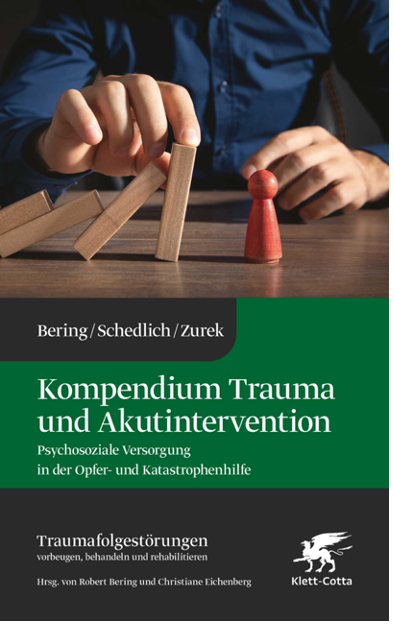
Research and best practice examples on this topic are summarized in Volume IV, “Compendium on Trauma and Acute Intervention,” of the series TRAUMA-RELATED DISORDERS — PREVENTION, TREATMENT, AND REHABILITATION.
Pillar 4: Trauma-Informed Care
Social service organizations are increasingly required to systematically integrate violence prevention into their quality management (QM) systems. This necessitates the use of trauma-sensitive approaches — in particular, trauma-informed care (TIC), which transforms an organization into a holistic system in which every employee has internalized a basic understanding of trauma.
- What characteristics can be used to determine whether an organization works in a trauma-sensitive manner?
- What interventions are necessary to make an organization trauma-sensitive?
- What competencies will be achieved after the transformation?
If you have any questions about our focus area, feel free to contact us. Please direct your inquiries to Prof. Dr. Robert Bering (E-mail: robert.bering@uni-koeln.de).