From the Water: Transforming Education for the Long Term
© Photo: Miriam Eble
Water is the basis of life, a cultural symbol, and part of vulnerable planetary cycles. In educational processes, however, its significance is often limited to a single environmental or sustainability topic. The project “Starting with Water: Transforming Education for Sustainability” therefore explores how (early childhood) education changes when water is not merely treated as a subject of study but becomes the starting point for pedagogical thought and action.
In collaboration with two childcare centers, the project explores the relationships between children, educators, water, other living beings, objects, and places. How is water present in everyday educational life? What experiences, stories, feelings, and forms of knowledge emerge from encounters with water? And how can such encounters open up new approaches to sustainable education?
Theoretically, the project draws on posthumanist and hydrofeminist approaches. As “Bodies of Water,” human bodies are understood as part of comprehensive water cycles and aqueous relationships (Neimanis 2017). “Thinking with Water” focuses on the life-giving and connecting power of water (Chen, MacLeod & Neimanis 2013). International research on water relationships in early childhood also shows how educational practices influence the ways in which water is experienced, used, and controlled, and what sustainable cultures can emerge from this (Pacini-Ketchabaw & Clark 2016; Ødegaard, Birkeland & Oropilla 2024)
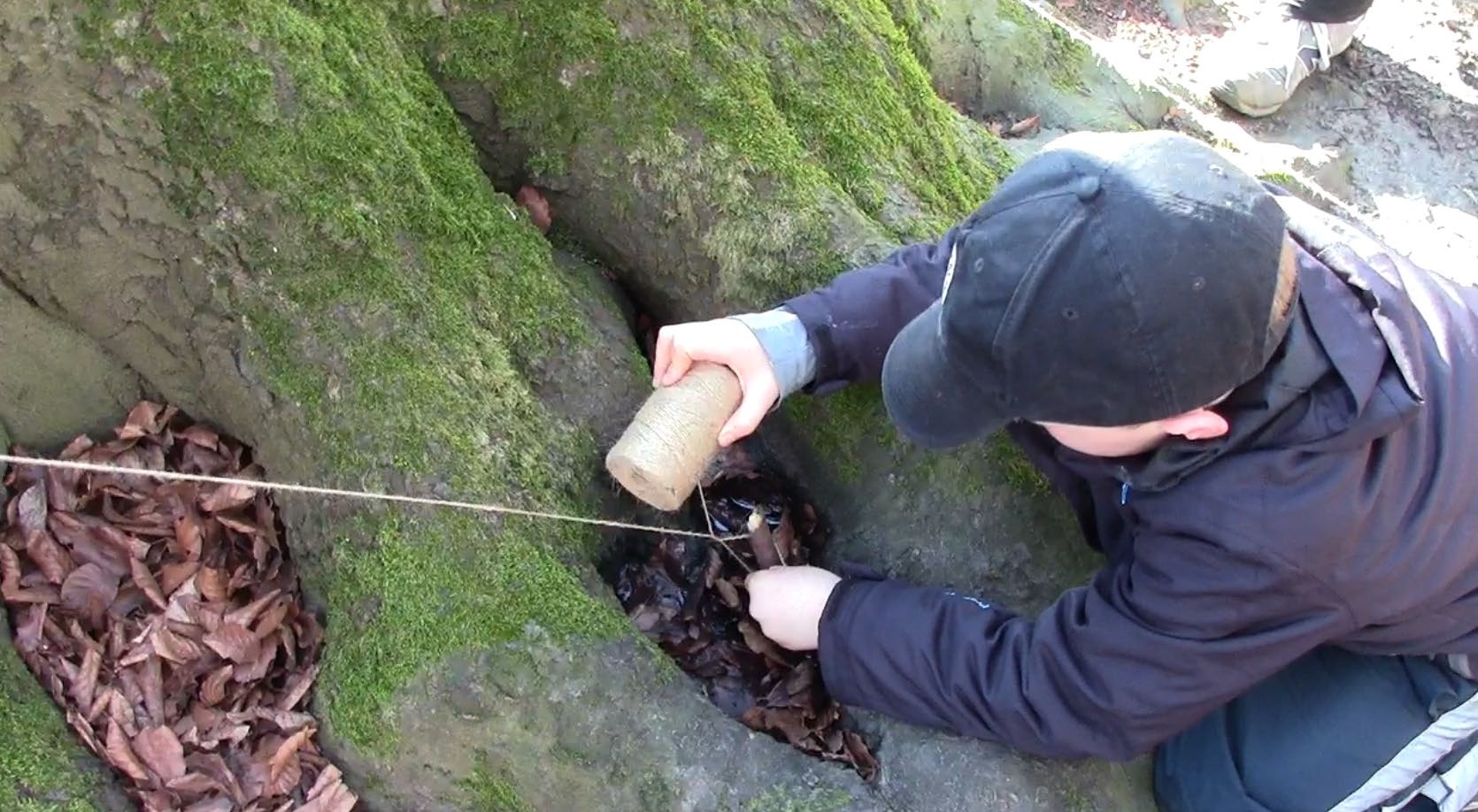
The project is framed within a post-qualitative approach. Experimental research practices such as water mapping, video, photo, and audio recordings, transcriptions, and conversations emerge through walking alongside children, professionals, water, and places. “Walking-with” is understood here as an attentive and affective research practice—not as research about a place, but with it (Malone, Blenkinsop, Jickling, & Morse 2024).
Findings are incorporated into academic theses, the further development of university teaching, and the education and continuing professional development of educational professionals.
Project Team: Prof. Dr. Ursula Stenger, Miriam Eble, M.A., and Sümeyye-Beyza Sarikaya
Funding: The project was funded by the University of Cologne’s Sustainability Action Fund.
Chen, C./ Macleod, J./ Neimanis, A. (2013). Thinking with Water. Montreal & Kingston: McGill-Queen’s University Press.
Malone, K., Blenkinsop, S., Jickling, B., & Morse, M. (2024). *Wilding Ecologies, Walking-with Glacier: An Educational Novella*. Springer Nature.
Neimanis, A. (2017). *Bodies of Water: Posthuman Feminist Phenomenology*. Bloomsbury Academic.
Ødegaard, E.E., Birkeland, A., Oropilla, C. T. (2024): A Pedagogy of Emergent Ocean Literacy – Narrative Accounts of Children’s Explorations in the Coastal Landscapes of Western Norway. KINDknow. Kindergarten Knowledge Center for Systemic Research on Diversity and Sustainable Futures. Western Norway University.
Pacini-Ketchabaw, V., & Clark, V. (2016). Following watery relations in early childhood pedagogies. Journal of Early Childhood Research, 14(1), 98–111.