Rehabilitation Sciences (Dual-Major M.A., BM 5)
“Basic Module 5: Fundamentals of Rehabilitation Science 3” includes:
a) Seminar 1 (3 LP)
b) a module exam in the form of a presentation (3 LP)
Seminar “Introduction to SPSS for Descriptive and Inferential Statistical Methods”
In this seminar, students are introduced to the statistical software SPSS and learn to apply and accurately interpret descriptive and inferential statistical methods in SPSS.
This includes, in particular, the following areas:
1) Preparing the dataset:
- Program installation
- Data entry
- Reversing/recoding items
- Calculating variables
2) Data analysis in SPSS:
- Descriptive Analysis of the Dataset
- Relationships (Correlations)
- Various inferential statistical tests
Seminar: “'Alternative Facts' and Special Education Influencers—What’s the Truth Behind Information from the Internet and Social Media?”
Social media, websites, self-help books—these days, there’s an almost overwhelming amount of information and advice available that explains topics in special education and is intended to make it easier to cope with disabilities in everyday life. In this seminar, we will select a few of these information sources and, drawing on empirical studies, examine how “well” the insights they contain are supported by scientific research—or whether they represent pseudoscientific views that, at best, do no harm.
Module Content
Through the module “Fundamentals of Rehabilitation Science 3,” students acquire in-depth scientific and methodological knowledge to scientifically reflect on, analyze, and engage with the systems and processes of rehabilitation, as well as to plan interventions, evaluate them, and further develop them based on scientific evidence.
The module combines students’ individual areas of focus with a fundamental perspective on rehabilitation sciences, thereby creating a connection that links the knowledge acquired by the end of the program to various contexts.
The overarching goal of the module is to prepare students, through comprehensive and individualized instruction, to promote the rehabilitation of people with disabilities or impairments as well as chronic illnesses, to foster self-determination and equal participation in social life, and to prevent and counteract disadvantages.
Module Objectives and Competencies to Be Acquired According to the Module Handbook
Students…
- gain in-depth insight into selected theories and fields of research in rehabilitation sciences and can professionally contextualize current issues in special education and rehabilitation.
- are able to discuss and evaluate conceptual models, theories, discourses, fields of research, and current issues in special education and rehabilitation in a focused manner.
- have the ability to analyze and discuss disability and rehabilitation in specific fields of application against the backdrop of social and cultural structures and processes.
- can apply, systematically organize, and interpret the theoretical frameworks and methodologies relevant to special education and rehabilitation in individual contexts.
Semester Schedule
The SPSS seminar is offered in both the winter and summer semesters; the “Alternative Facts” seminar is currently offered only in the winter semester.
Module Exam
The module exam can be taken in either the winter or summer semester, depending on when the seminar is taken.
Contact Persons
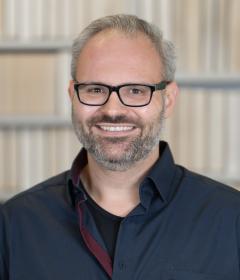
If you are already attending one of our courses, the respective instructor is, of course, your primary point of contact. Otherwise, please feel free to contact Dr. Matthias Krepf with questions regarding course content and Dipl.-Jur. Stefanie Ström with organizational questions.
Raum
207
Aachener Straße 197-199
50931 Köln (Besuchsadresse)
Brieffach
9
Adresse
Frangenheimstraße 4
50931 Köln
Sprechstunde
nach Vereinbarung

Raum
201
Aachener Straße 197-199
50931 Köln (Besuchsadresse)
Brieffach
9
Adresse
Frangenheimstr. 4
50931 Köln
Sprechstunde
nach Vereinbarung