

Welcome to the Faculty of Human Sciences, Prof. Dr. Nina Möntmann!
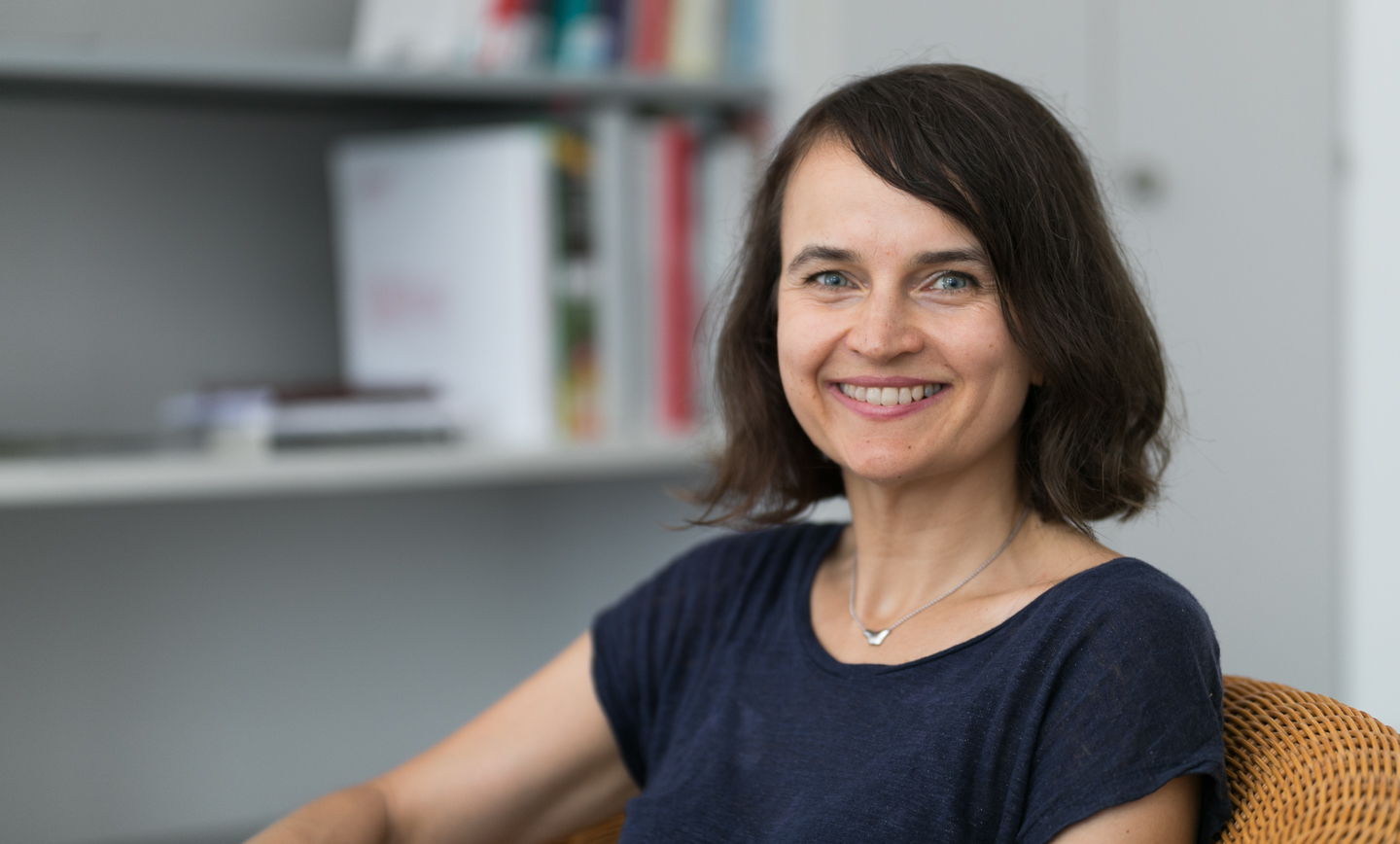
Prof. Dr. Nina Möntmann conducts research and teaches in the field of art theory at the Faculty of Human Sciences at the University of Cologne.
A few questions for Prof. Dr. Nina Möntmann ...
1. Since when have you been a member of the Faculty of Human Sciences?
Since October 2018.
2. What are the main areas of focus in your professorship?
The title of my professorship is “Art Theory of the 20th and 21st Centuries.” My research focuses on the aesthetic and economic perspectives of (art) institutions in the context of global changes and the associated social and political realignments in artistic, curatorial, and institutional practice; on participatory art forms; and on dematerialization as an aesthetic and social process, ranging from Concept Art to the digital society and its art forms.
3. What do you particularly appreciate about the University of Cologne?
My colleagues at the institute gave me a very warm welcome, and I have also received many friendly and interested inquiries from other departments and faculties. I was very pleased by this interest in exchange and collaboration.
4. What is your motto for university teaching?
Only by questioning the canon and incorporating the social functions of art and its practitioners can one arrive at the place where relevant questions and insights lie hidden.
5. What would you like to impart to your students?
Art is the only discipline that deals with everything that occurs in this world. Accordingly, art theory is intrinsically transdisciplinary. This ability to engage with everything in theory and practice is not only what is exciting and inspiring about art, but also entails the task of confronting the social, ecological, political, and other problems and questions of our time in a research-oriented and creative manner and expressing them analytically.
6. Where are you originally from?
I was born in the Ruhr region, where I particularly appreciated the abundance of greenery and the landscape of the Ruhr Valley. People who don’t know the Ruhr region never believe you when you say that. However, I moved away right after school—first to Munich for my studies, then to Hamburg. Since then, I’ve been committed to the far north with a
curatorial position in Helsinki and a professorship in Stockholm.
7. What is your attitude toward Carnival?
In general, I find it an interesting social experiment when, during a positively charged state of exception, rules and conventions are temporarily suspended. Then it comes down to how these spaces of freedom are utilized. I’m also currently learning a lot about phenomena previously inaccessible to me, such as the “Sitzungskarneval” and its rituals. As an occasional vegetarian, however, I won’t be able to warm up to “Rheinisch sushi.”
Curriculum Vitae:
Since 2018: University of Cologne, W3 Chair of Art Theory
2017–2018: State Academy of Fine Arts, Karlsruhe, Riemschneider Curator
2007–2017: Royal Institute of Art, Stockholm: Professor of Art Theory and the History of Ideas
2003–2006: NIFCA (Nordic Institute for Contemporary Art), Helsinki, Curator
2000: University of Hamburg, Ph.D. thesis: Art as Social Space. Andrea Fraser, Martha Rosler, Renée Green, and Rirkrit Tiravanija
1994: M.A. in Art History
1995–1998: German Research Foundation, doctoral fellowship in the Research Training Group “Political Spaces,” Department of Art History, University of Hamburg
1988–1992: Ludwig Maximilian University, Munich
To the Chair’s page ...